- Authentication checks. Deploy FastEdge apps based on the JWT authentication template or develop a custom authentication functionality.
- Custom headers modification. Adjust header information on requests for personalized and more secure content delivery.
- Custom access rules. Use advanced geo-blocking and time-based blocking to control user access to your content and mitigate potential threats.
How it works
Unlike traditional HTTP applications, a CDN application in FastEdge must be developed according to the Proxy-Wasm (WebAssembly for Proxies). This ensures compatibility and standardization across different CDN environments. The application is called at the early stage of CDN processing, allowing for immediate intervention and customization. We’re actively working on new interception points across the CDN workflow to cover a wide range of use cases.Set up FastEdge integration with CDN
To get started, you need to have a CDN resource configured for your origin. If you don’t have Gcore CDN set up, follow the instructions from this guide: Create a CDN resource.Step 1. Create a FastEdge application
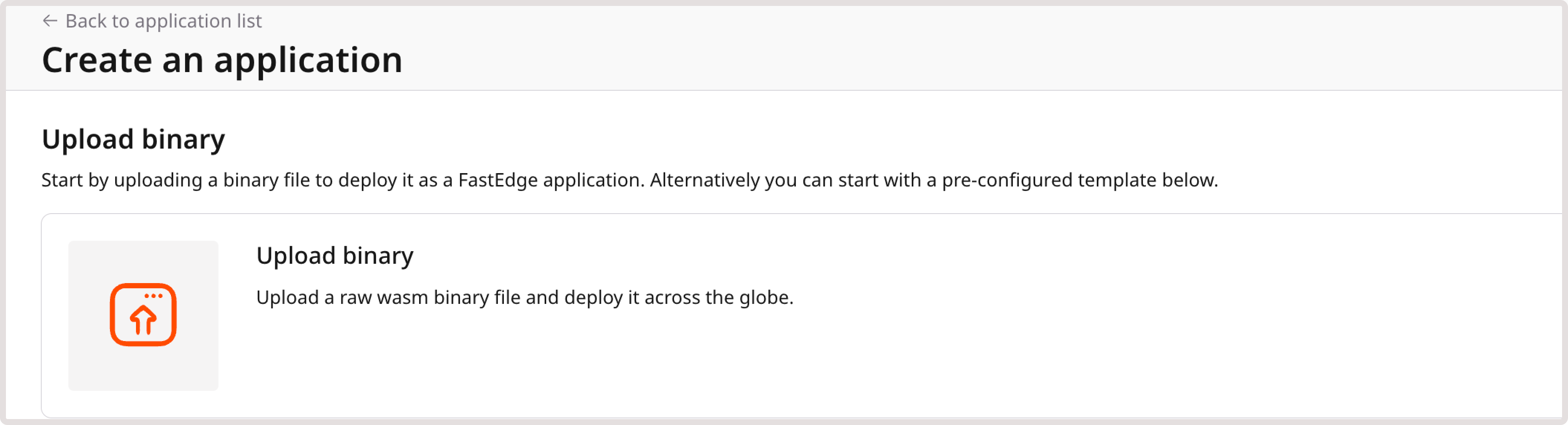
You can deploy an application from a predefined template or from a custom Wasm file. If you choose the latter option, make sure that your Wasm binary file is compliant with the WebAssembly standard for proxies.- Deploy from the template
- Deploy a custom CDN application
Currently, you can use a predefined template to enable authentication in your application. The template is configured to verify the JSON Web Token (JWT) in the request header.To deploy an application from the template:1. In the Gcore Customer Portal, navigate to FastEdge.2. Open the CDN Applications page and click Create new application.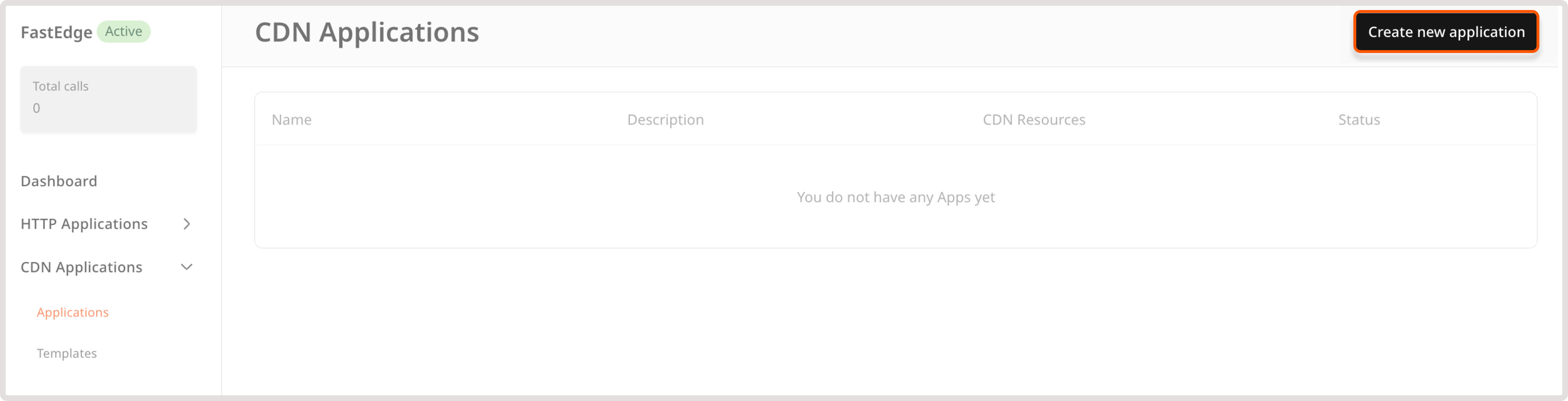 3. In the Create from a template section, choose Validate JWT in Authorization header.
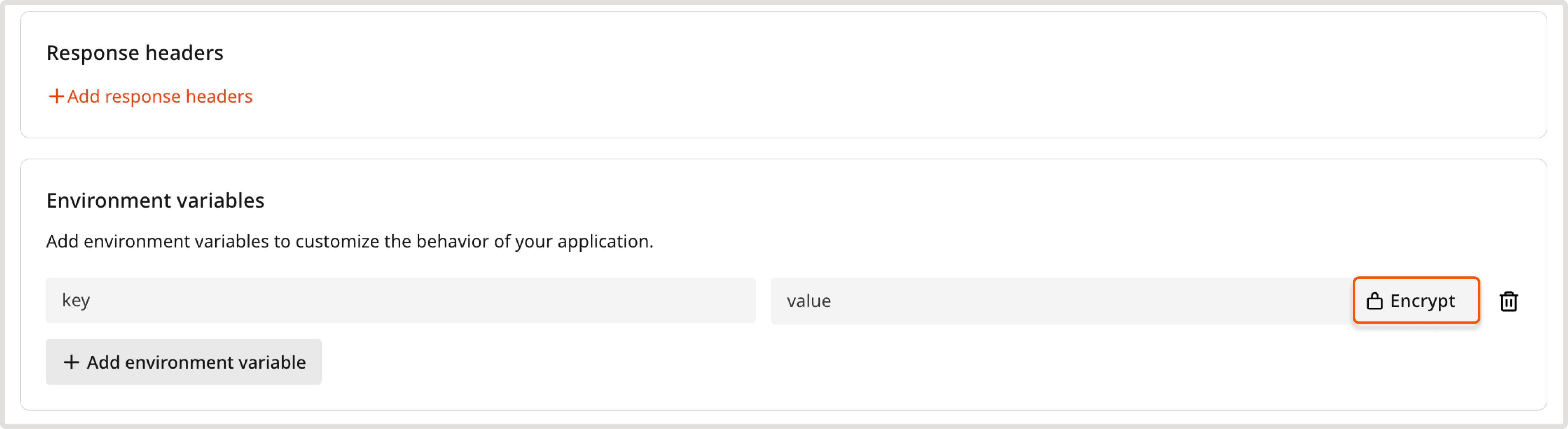
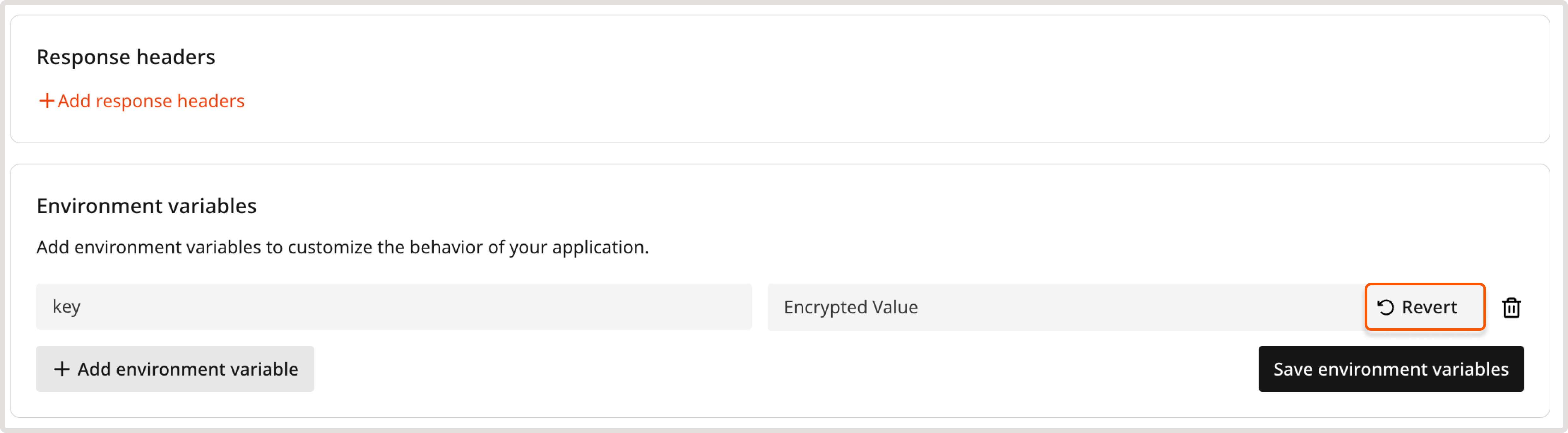
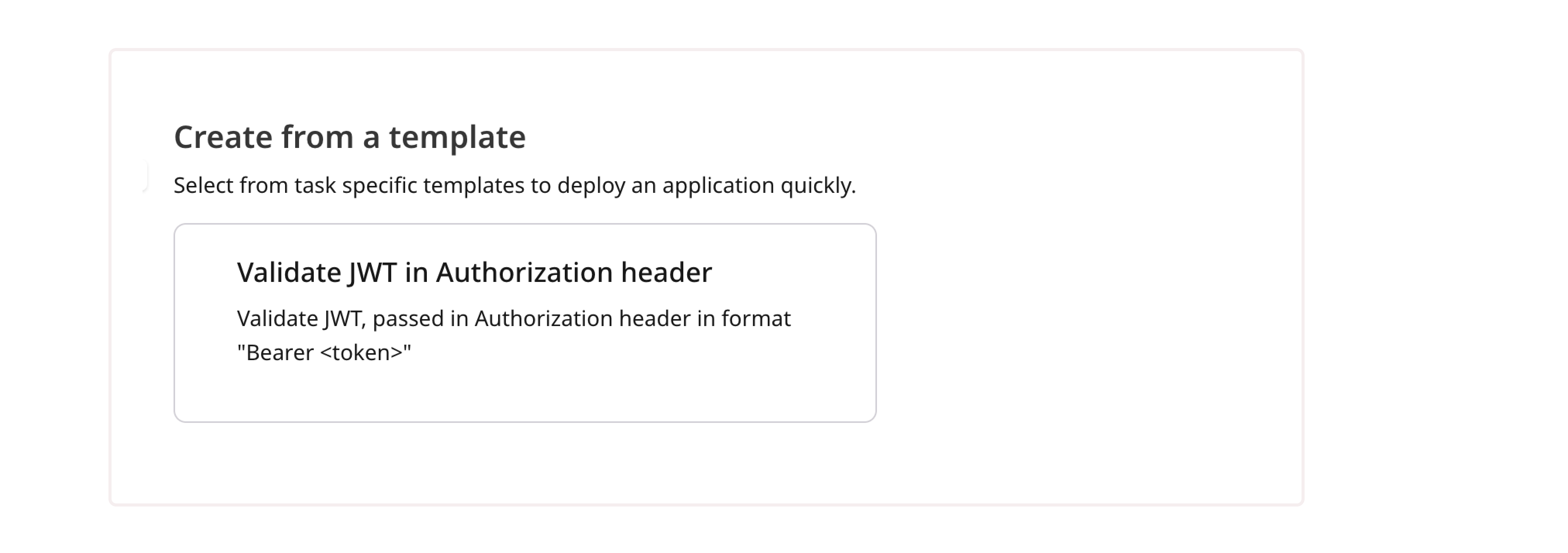 4. Enter a name for your application and, optionally, update its description.5. Add required environment variables—a token signing key that will be used for authentication checks.
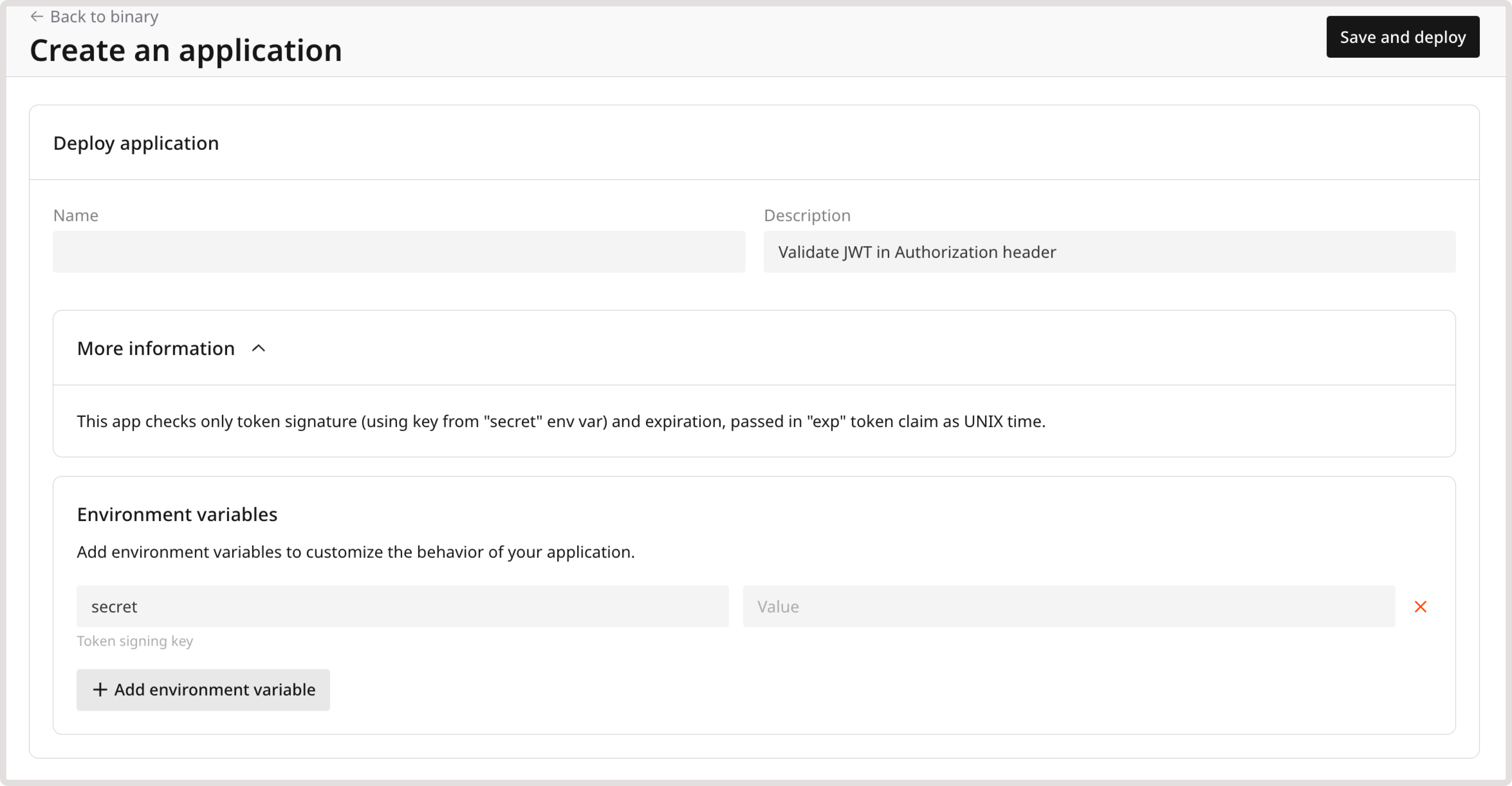 6. Click Save and deploy.Your application has been successfully deployed and can now be accessed through the CDN.
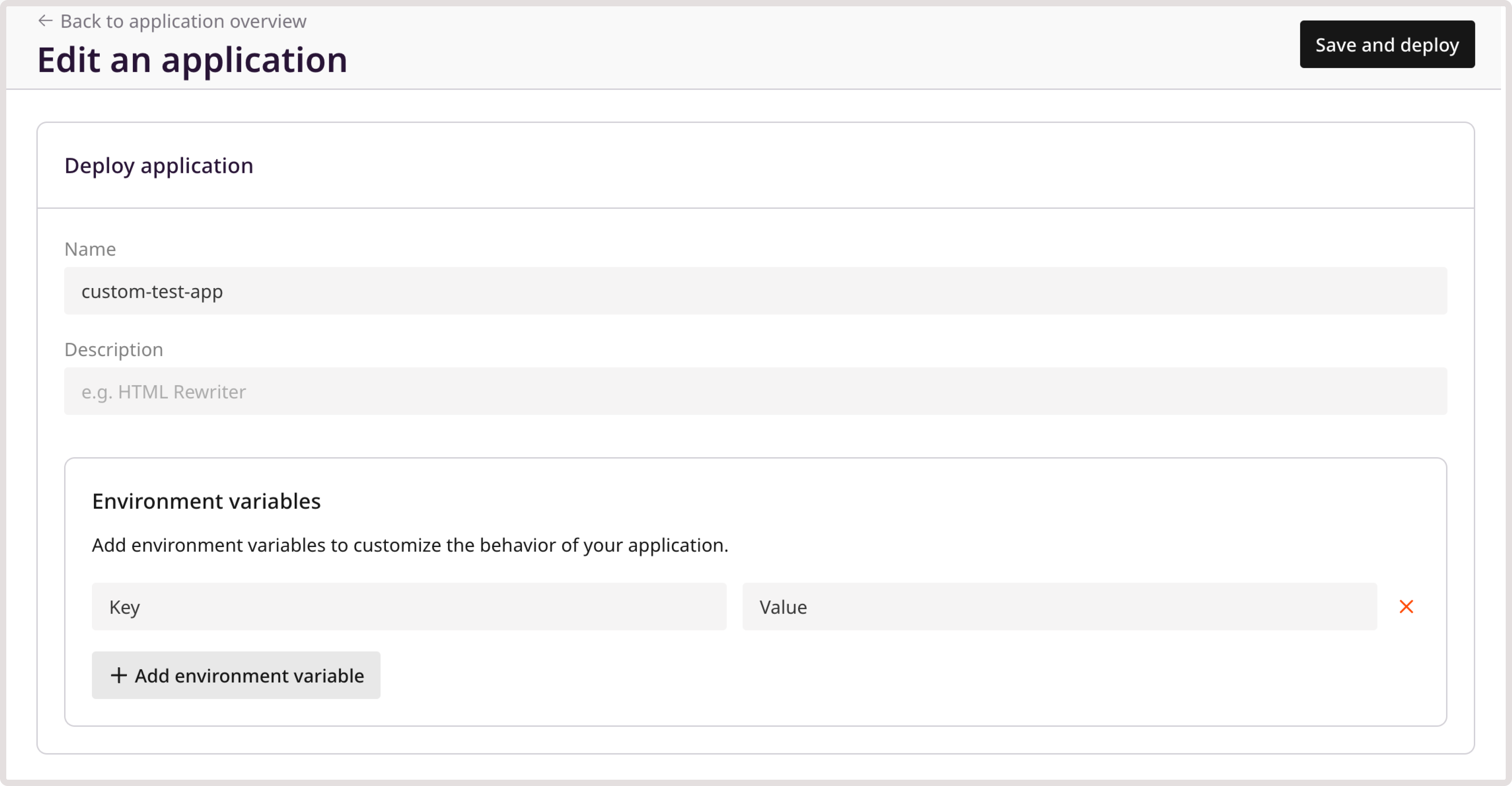
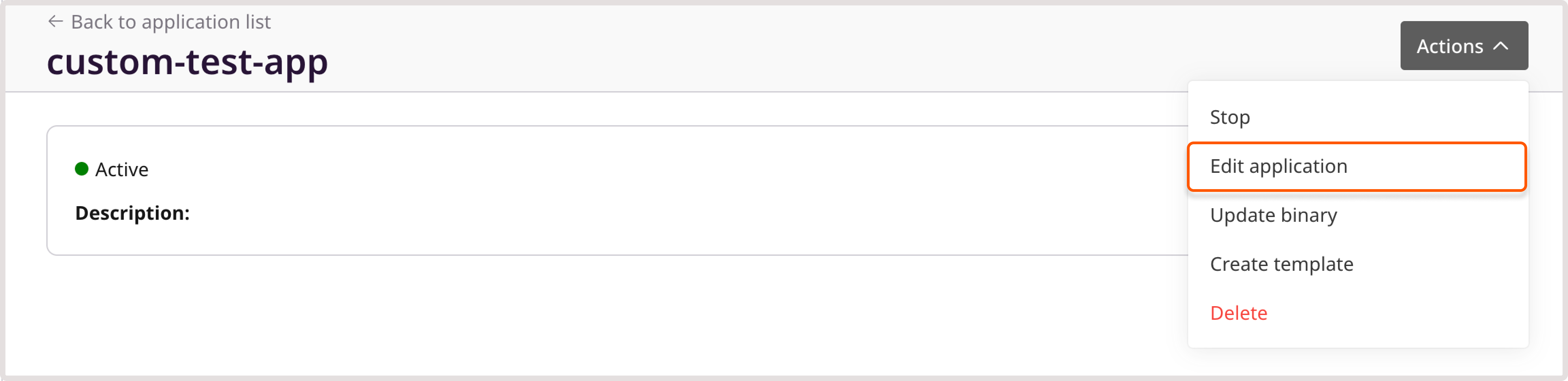
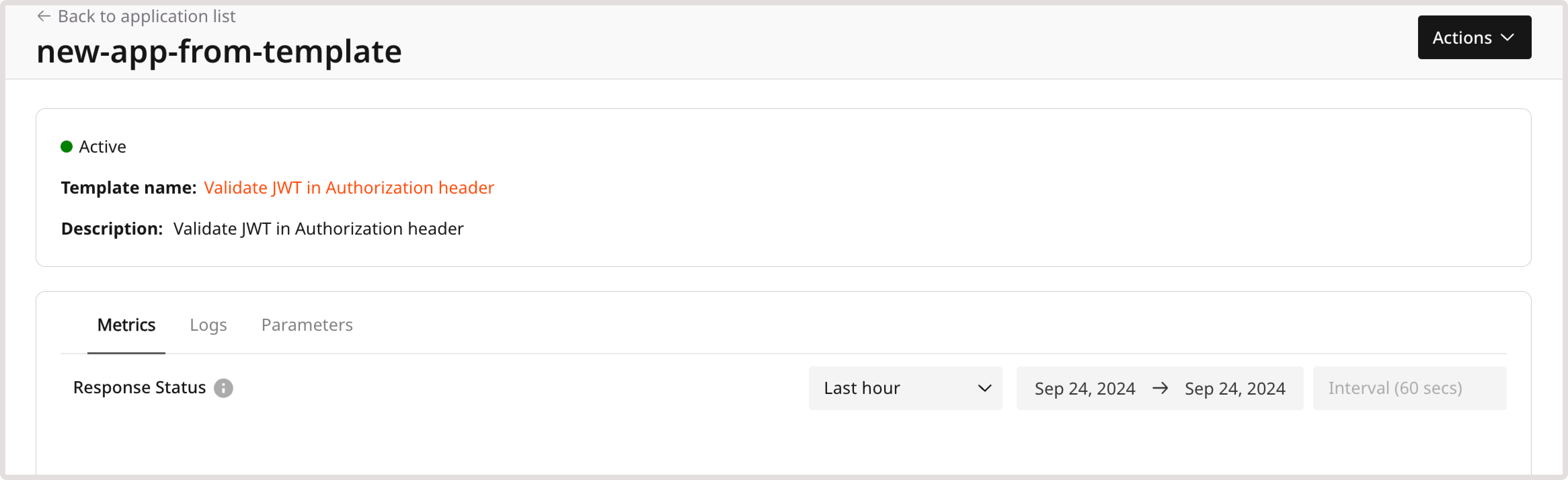 If you need to adjust the configuration, click Actions > Edit application.
Step 2. Enable FastEdge functions for your CDN resource
You can enable the configured Wasm functionality either to the whole CDN resource or just to some URLs.- For the whole CDN resource
- For specific URL paths
1. In the Gcore Customer Portal, navigate to CDN.2. Find the resource you want to integrate with FastEdge and open the resource settings.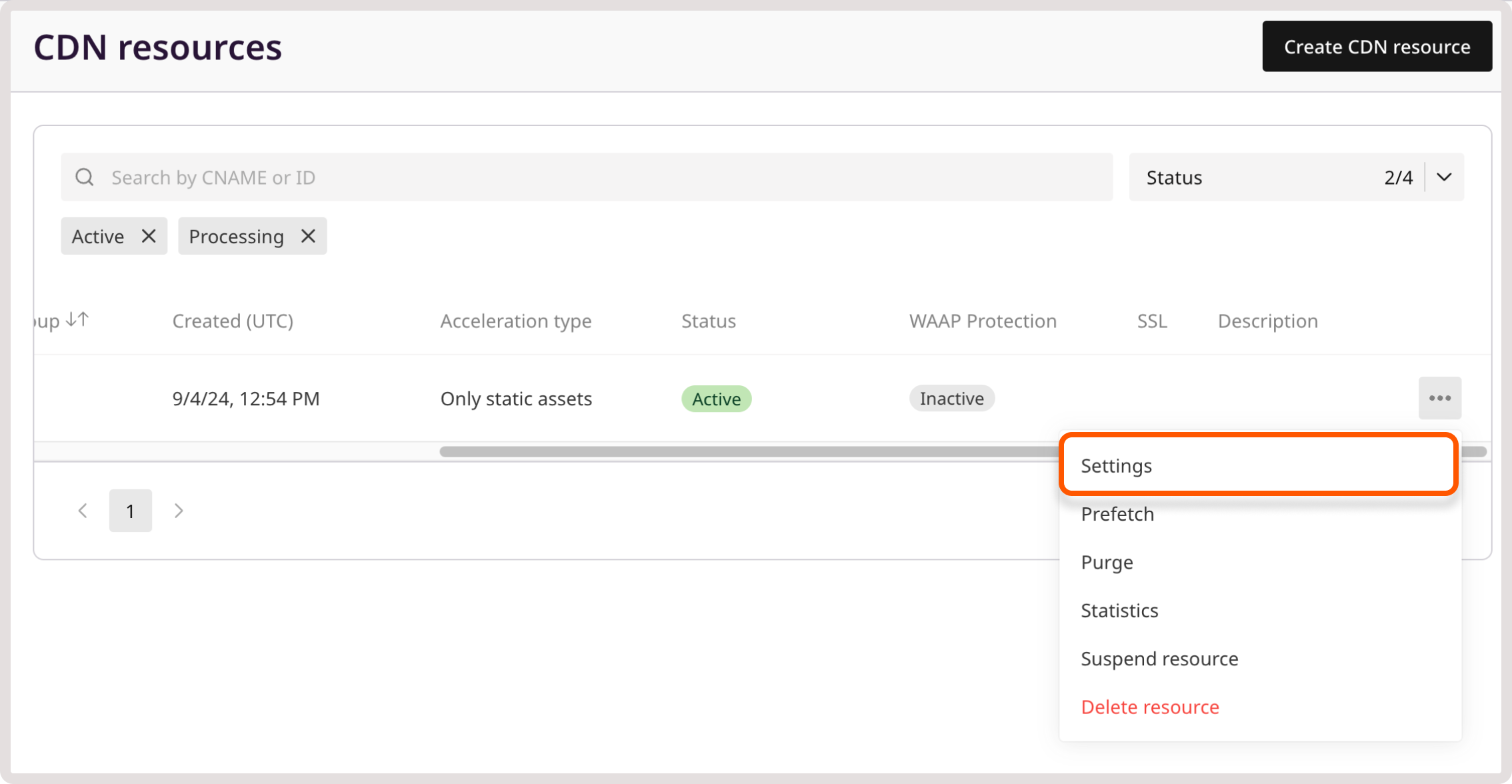 3. Scroll the page down to the FastEdge apps section and enable the toggle On request headers.Currently, we support only one event - On request headers, which can be used for authentication and request header manipulation before calling the origin.
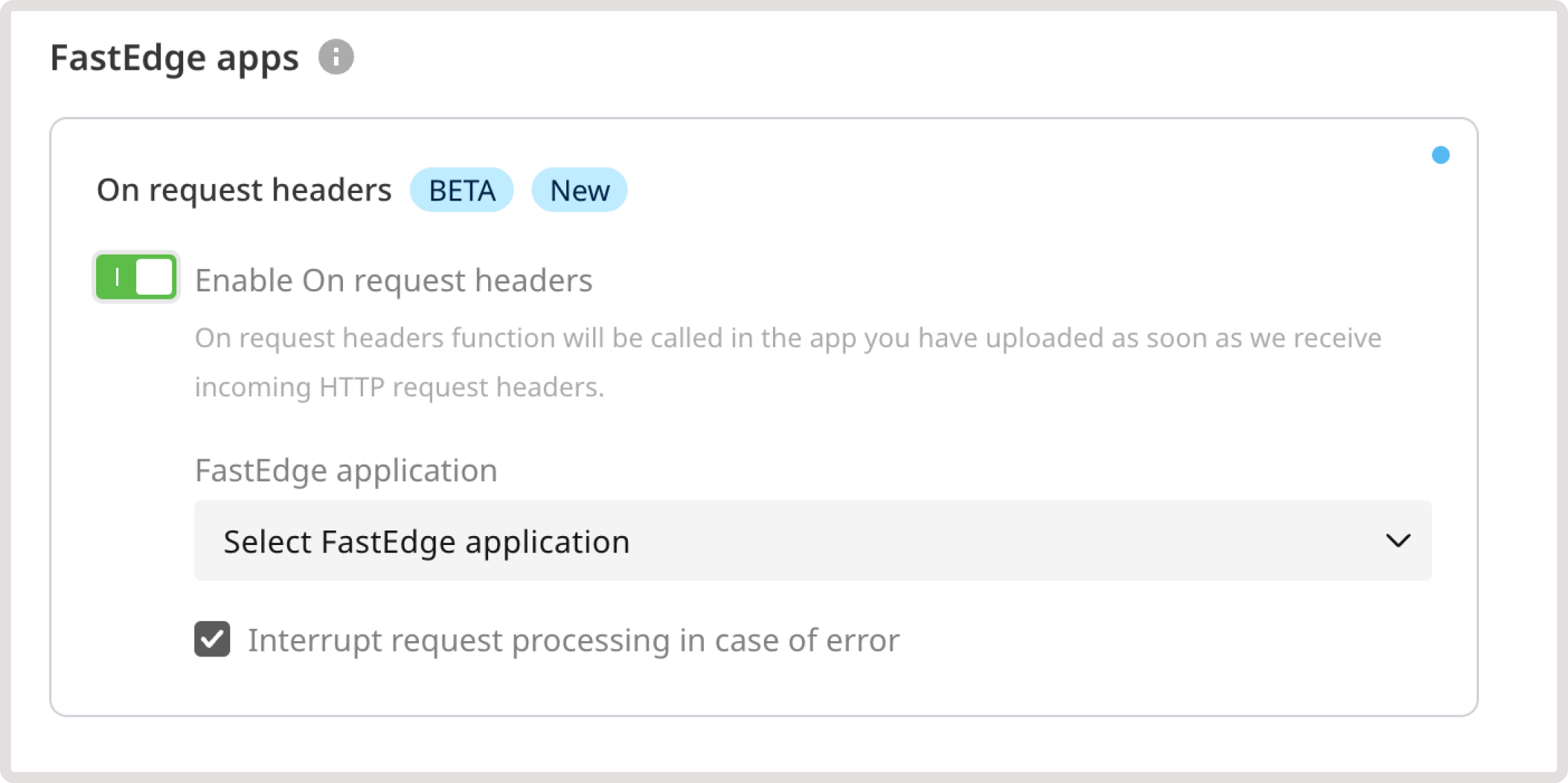 4. Choose your application from the dropdown.5. (Optional) Select the Interrupt request processing in case of error checkbox.6. Click Save.
InfoThe Interrupt request processing in case of error checkbox is enabled by default. This ensures that any errors on the FastEdge side will be returned to the browser with the relevant response code. If you disable the checkbox, CDN will ignore the error and pass requests directly to the origin. For security considerations, we recommend keeping this checkbox active.
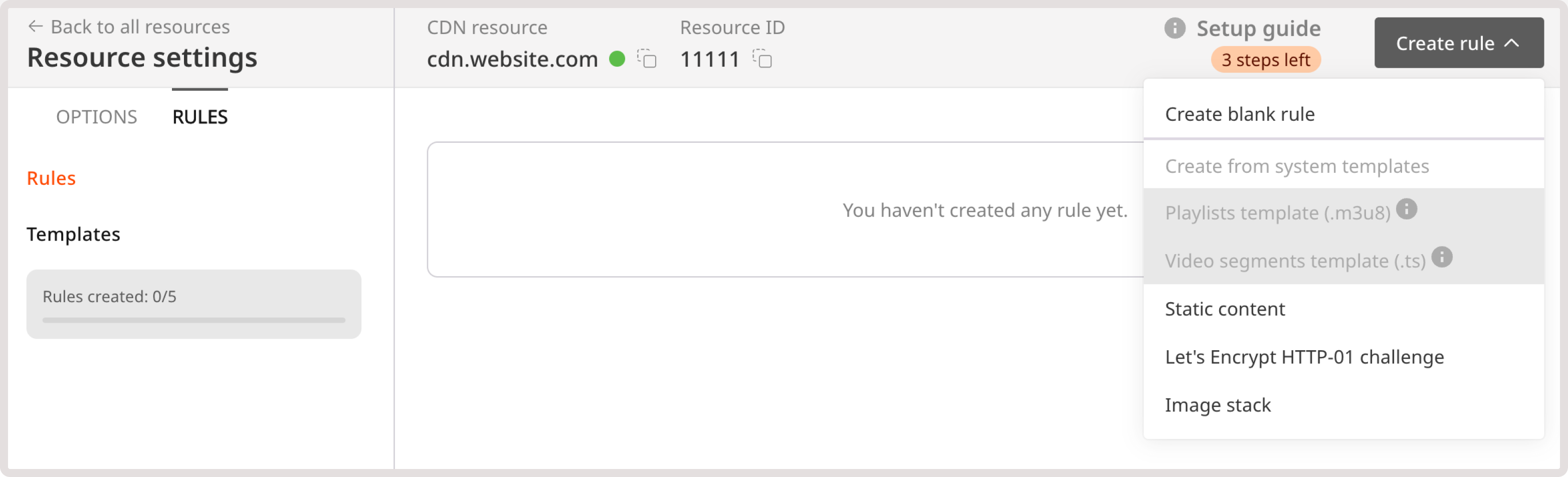
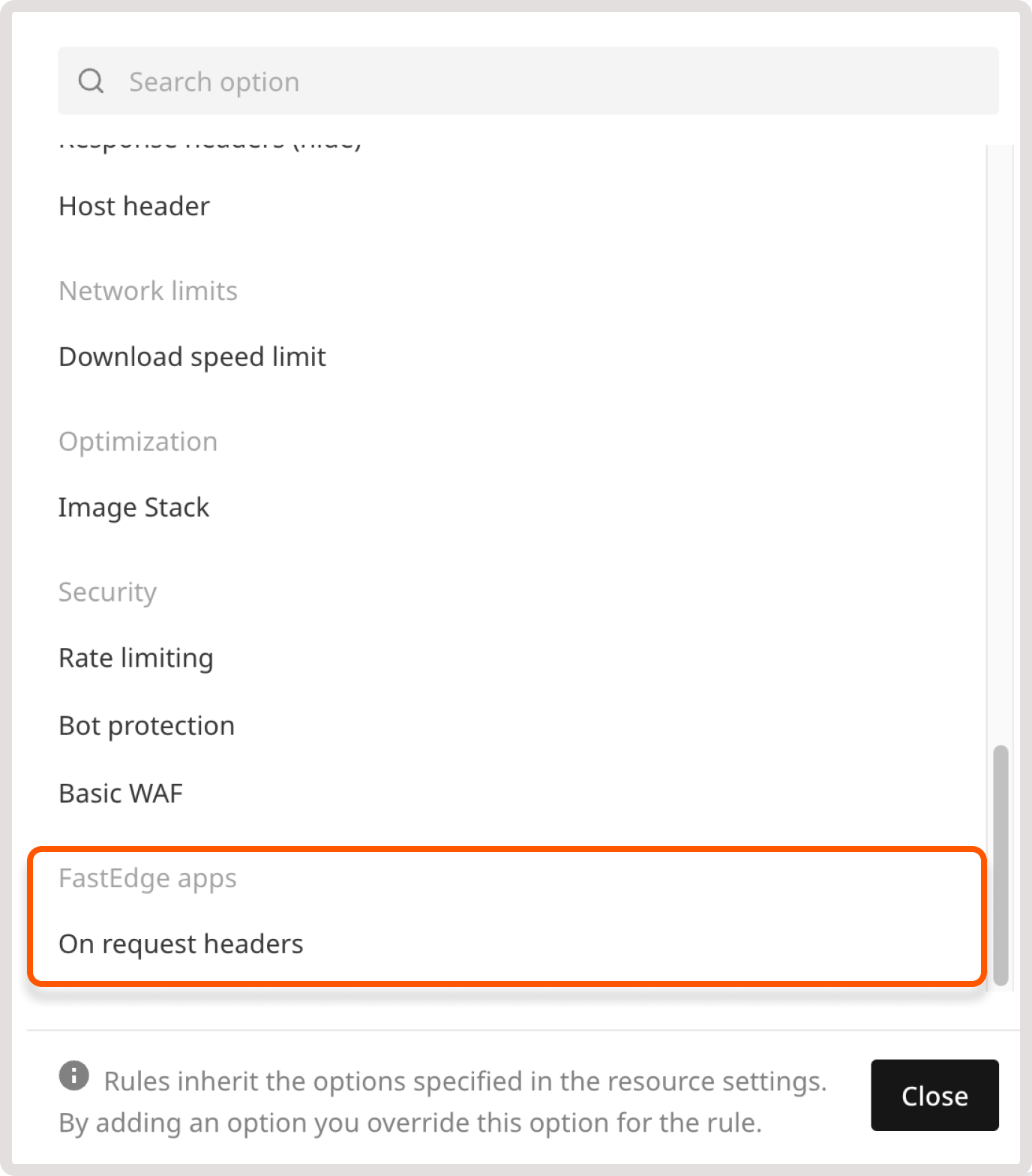
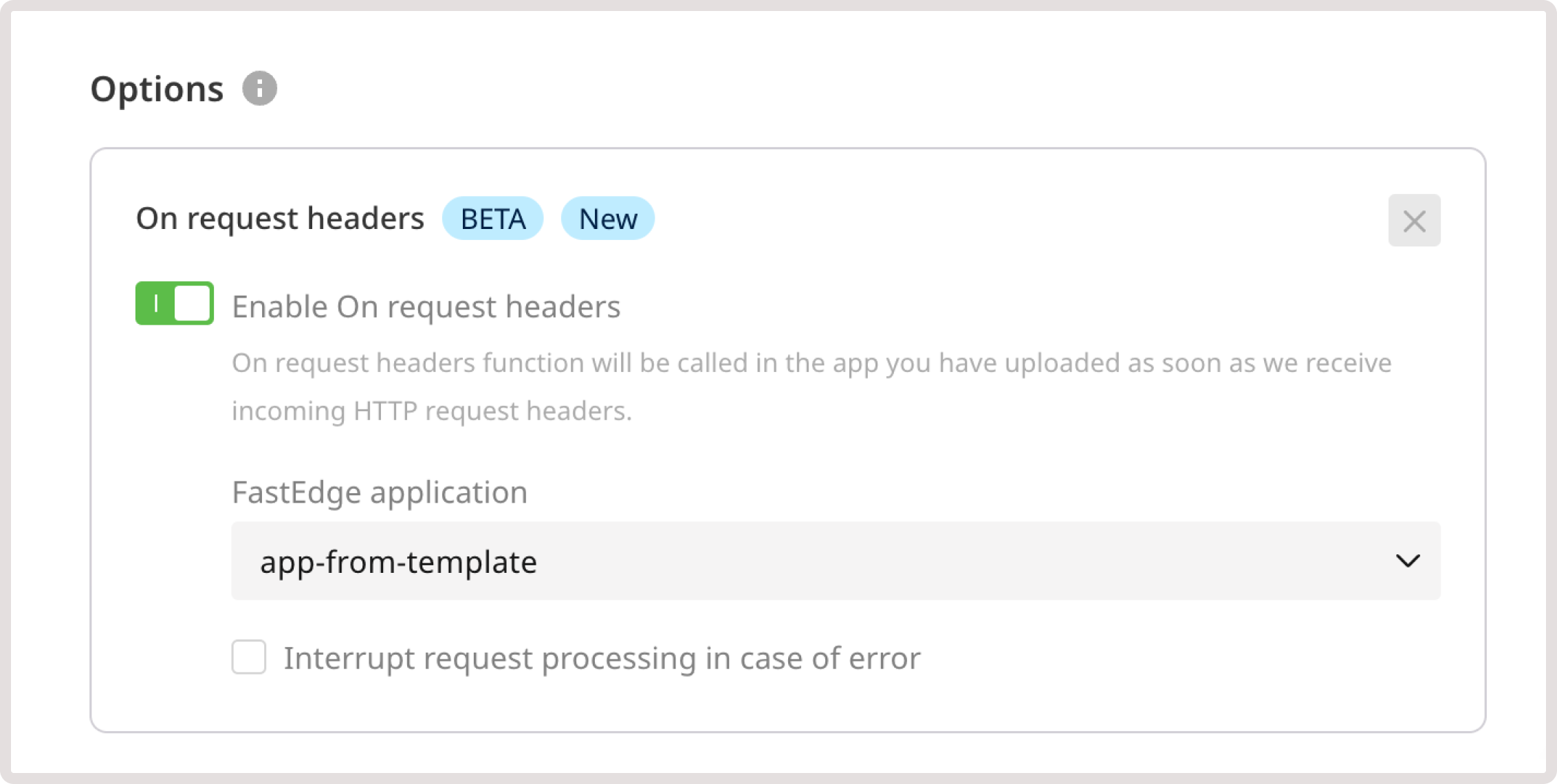
Disconnect FastEdge from CDN
If you no longer need to use the functionality configured in your FastEdge application, you can disable the FastEdge functions for your CDN resource. The steps will slightly differ based on whether you choose to remove FastEdge from the whole CDN resource or just specific URLs. 1. In the Gcore Customer Portal, navigate to CDN. 2. Find the resource integrated with FastEdge and open the resource settings.Delete CDN application in FastEdge
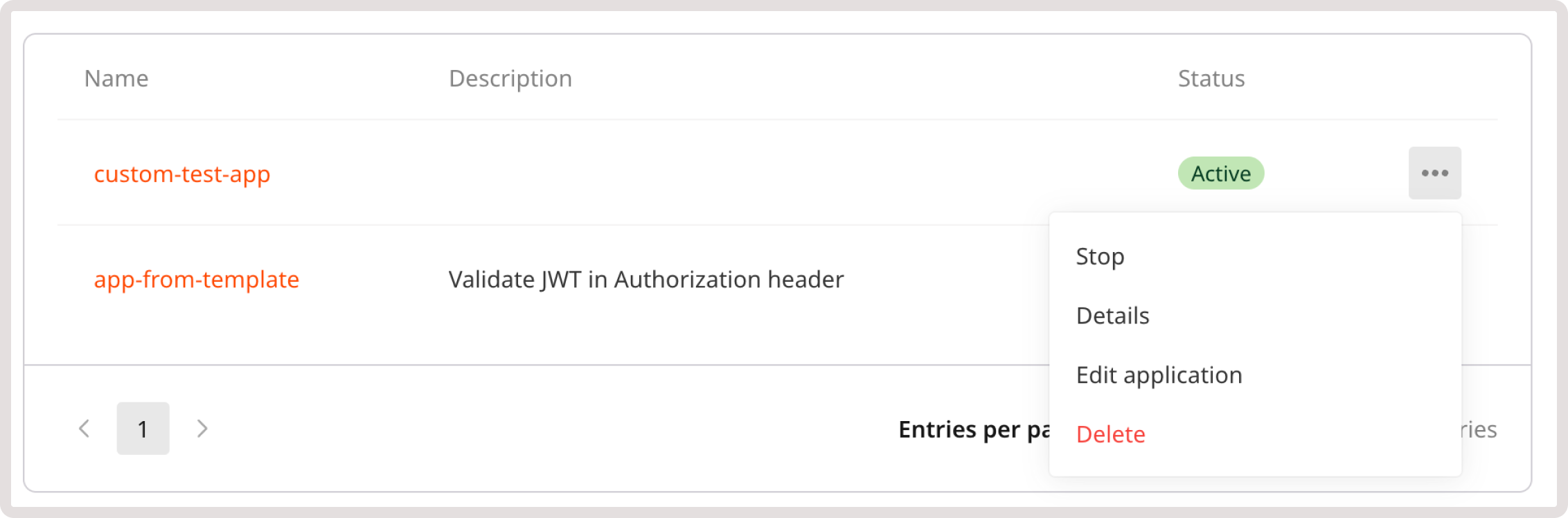
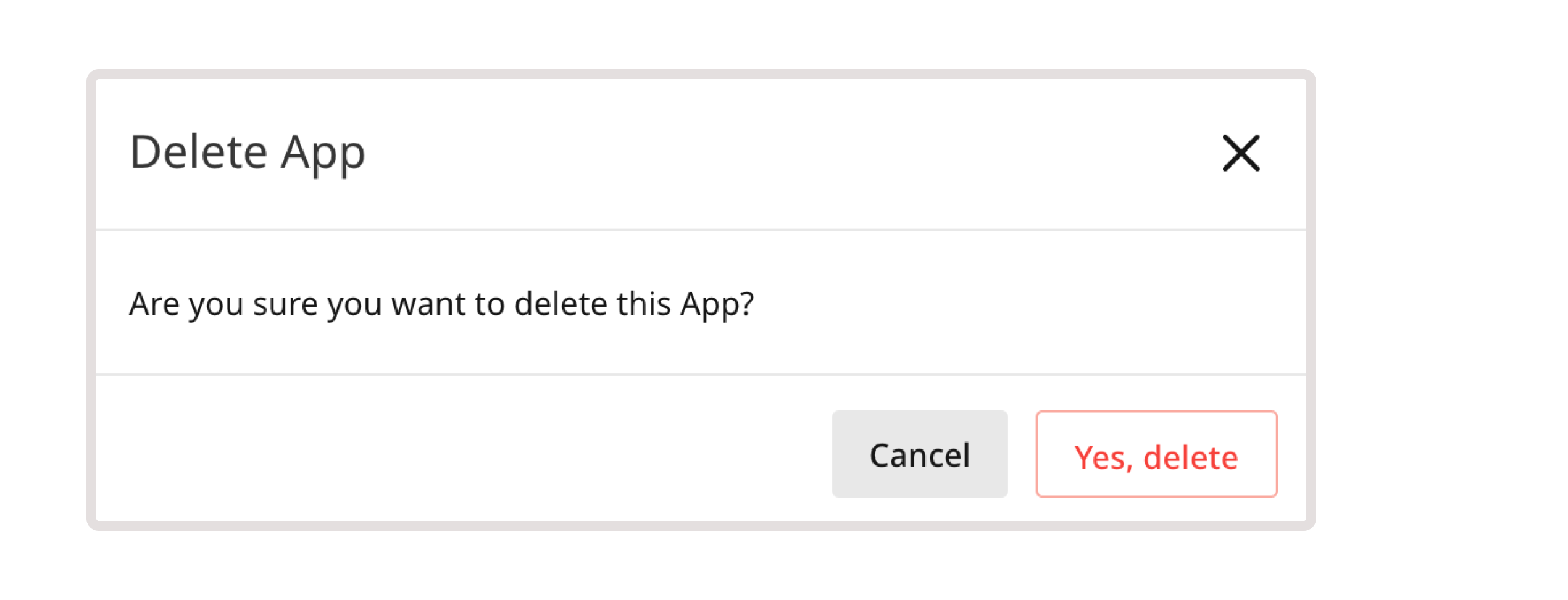
InfoYou can’t delete a Fastedge application that is enabled for a CDN resource. To remove the application, disconnect it from the CDN resource first.